
Exotic Organic Farm
Coimbatore, India
Not a seed-grown look-alike. Not tissue culture. Every Miyazaki sapling we sell is grafted directly from fruiting mother trees on our own living-soil orchard in Coimbatore, then acclimated to Indian conditions before it ever reaches your door.
Grafted, not seed-grownTrue-to-type mother tree genetics, not an unreliable seedling.
Soil-acclimatedRaised in Coimbatore's climate, not shipped cold from Japan.
Living organic soilJeevamrutham & Panchagavya fed, zero chemical inputs.
Farm-directGrown, packed and shipped by us — no middlemen.
Unlike imported or unverified tissue-culture plants sold by resellers, every sapling at Exotic Organic Farm is grafted from mother trees growing in our own living-soil orchard in Coimbatore. Raised without chemicals and pre-acclimated to Indian weather from day one, our saplings are built for a higher survival rate after shipping — not for a photo on a listing page.
The word "genuine" matters because the market is flooded with mislabeled plants and outright fake Miyazaki seeds. Here's exactly what to check before you buy from any seller — including us.
A genuinely grafted sapling shows a visible healed joint a few inches above the soil line, where Miyazaki scion wood meets the rootstock — a slight kink or scar in the bark, not a perfectly smooth, uniform stem. A smooth stem with no graft mark is a strong sign the plant was seed-grown and mislabeled.
New leaf flush on genuine grafted Miyazaki growth typically emerges with a reddish-bronze tint before hardening to deep green — a trait carried over from the mother tree. Ask any seller for a current photo of new growth on the exact plant you're buying, not a stock image.
A real nursery growing genuine genetics can show you the actual fruiting mother tree the scion was cut from — on video, on a farm visit, or over a live video call. If a seller can't or won't show this, treat that as a red flag.
This is the single most common scam in this category. Miyazaki genetics do not reliably breed true from seed — a seed-grown plant is essentially a gamble, not a genuine Miyazaki. Only a grafted sapling guarantees the fruit you actually paid for.
Our Miyazaki mango trees fruit on our own farm in Coimbatore, Tamil Nadu — the same trees your sapling's scion wood is grafted from. We've been recognized by the India Book of Records for cultivating 38 exotic mango varieties on a single acre using entirely chemical-free methods, and our approach to organic cultivation of imported mango varieties has been featured by Pasumai Vikatan and covered in Kuruthu Manvasanai magazine.
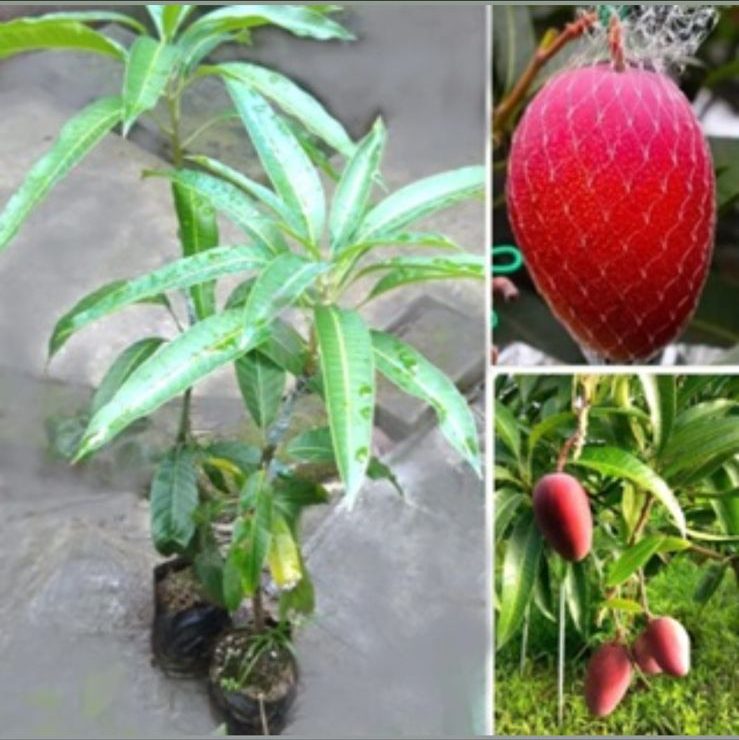
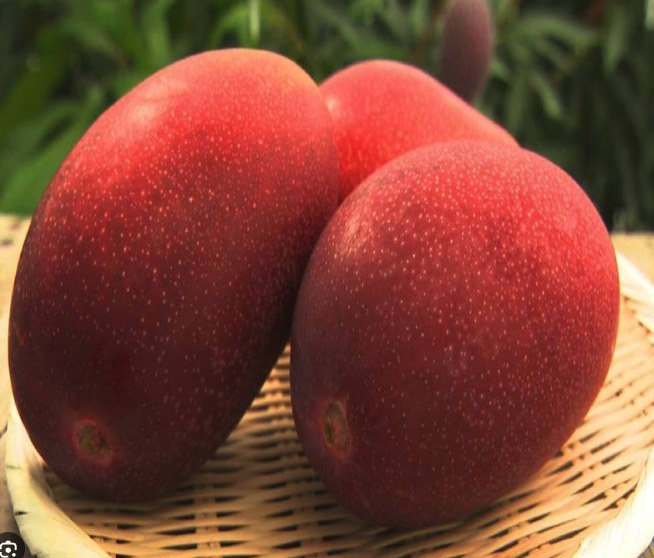 Mother Tree, FruitingGrafted Sapling, Ready
Press: Pasumai Vikatan video feature · India Book of Records entry
A plant imported directly, or raised in sterile lab tissue-culture, has to adjust to Indian heat, humidity and soil biology for the first time the moment it reaches your home — which is exactly when transplant shock is most likely to kill it. Our saplings skip that risk. Every Miyazaki sapling spends its early life rooted in the same living soil it will keep growing in after you plant it — soil we build ourselves with Jeevamrutham, Panchagavya, Meenamilam and banana-fermented cow manure, with zero synthetic inputs. By the time it reaches your door, it's already adjusted to Indian tropical conditions, not meeting them for the first time.
| Origin | Japan (Miyazaki Prefecture genetics), grafted and raised in Coimbatore, Tamil Nadu |
| Propagation | Grafted from fruiting mother trees — not seed-grown, not tissue culture |
| Soil | Living organic soil — Jeevamrutham, Panchagavya, Meenamilam, fermented cow manure; zero chemical inputs |
| Sunlight | Full sun, 6–8 hours daily |
| Suitability | Large pot (terrace/balcony) or open ground |
| Climate range | Suited to most Indian tropical and sub-tropical growing zones; protect from prolonged cold below 5°C |
| Price | ₹3,500 per sapling |
| Shipping | Pan-India, carefully packed, typical transit 2–5 days depending on destination |
Growth rate, time to first fruiting and eventual yield vary with local climate, pot/ground conditions and care — see our full growing guide for detailed, season-by-season guidance.
A live plant is fragile cargo. Here's exactly how we prepare every sapling before it leaves our farm.
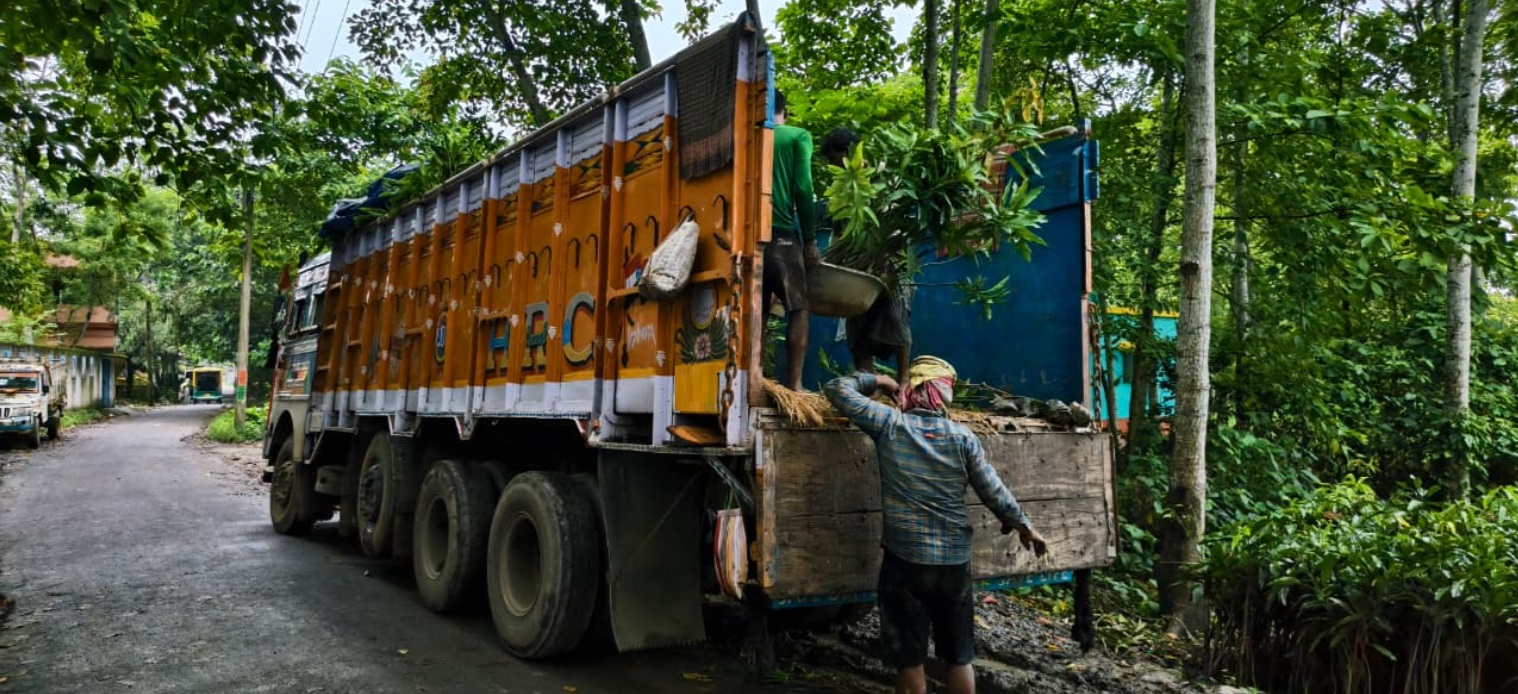 Loaded & Ready — Pan-India Dispatch
The root ball is wrapped to lock in moisture for the full journey, so roots don't dry out before planting — the single biggest cause of transit failure for live plants.
Each sapling is secured upright inside a sturdy cardboard frame with ventilation holes and internal cushioning, so it can't shift, snap, or crush other stock in transit.
South and West India typically see 2–3 day delivery; North and East India typically 3–5 days. We confirm your exact timeline on WhatsApp once your pin code is shared.
You get dispatch and tracking confirmation over WhatsApp, plus unboxing guidance so the first 48 hours after arrival are handled correctly.
Reducing transplant shock in the first two weeks matters more than almost anything else for long-term survival. Here's the short version — see the full growing guide for complete detail.
Unwrap gently, water the root ball lightly, and rest the sapling in shade (not direct sun) for 48 hours to recover from transit before any repotting or planting.
Moisten the root zone gently and consistently — no synthetic fertilizers or chemical additives in this window. Let the plant settle before feeding it anything.
Move to a 24–30 inch pot or a prepared ground hole with well-draining, living organic soil. Introduce direct sunlight gradually rather than all at once.
Every sapling ships from our own Coimbatore orchard, not a third-party warehouse.
Featured by Pasumai Vikatan, Kuruthu Manvasanai, and recognized by the India Book of Records.
Real answers about your specific plant, not a scripted chatbot.
No synthetic fertiliser or chemical pesticide anywhere on this farm — ever.
Check the graft union a few inches above the soil line, ask for a photo of the actual mother tree fruiting, and never buy "Miyazaki seeds" — genuine Miyazaki doesn't reliably breed true from seed.
Grafted — from our own fruiting mother trees at our Coimbatore farm. Not tissue culture, not seed-grown.
Yes — it's acclimated to Indian tropical conditions in our own soil before it ever ships, unlike freshly imported plant material.
Moisture-wrapped root ball, secured upright in a ventilated cushioned box, built to survive typical 2–5 day transit.
Grafted saplings generally fruit sooner than seed-grown trees since they carry mature mother-tree genetics from the start — exact timing depends on care and conditions.
Yes — grafted saplings suit container growing well. Use a 24–30 inch pot, well-draining soil, and 6–8 hours of full sun.