
Exotic Organic Farm
Coimbatore, India
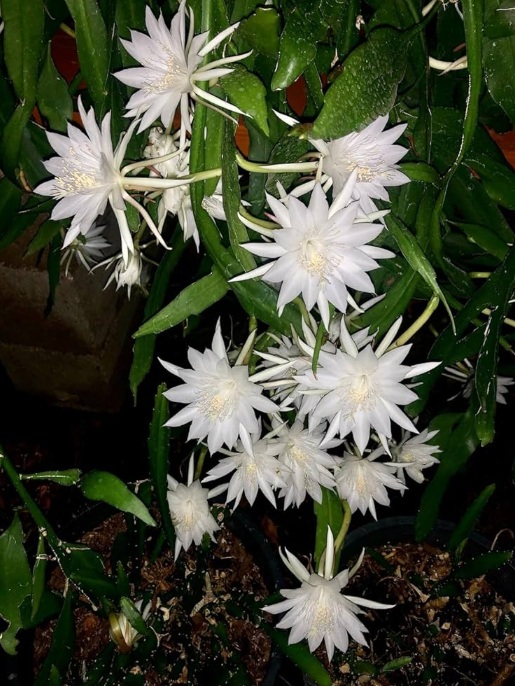
A leafy jungle cactus whose huge, fragrant white flowers open after dark for a single night. Known in India as Brahma Kamalam, and a rare treat when it blooms.
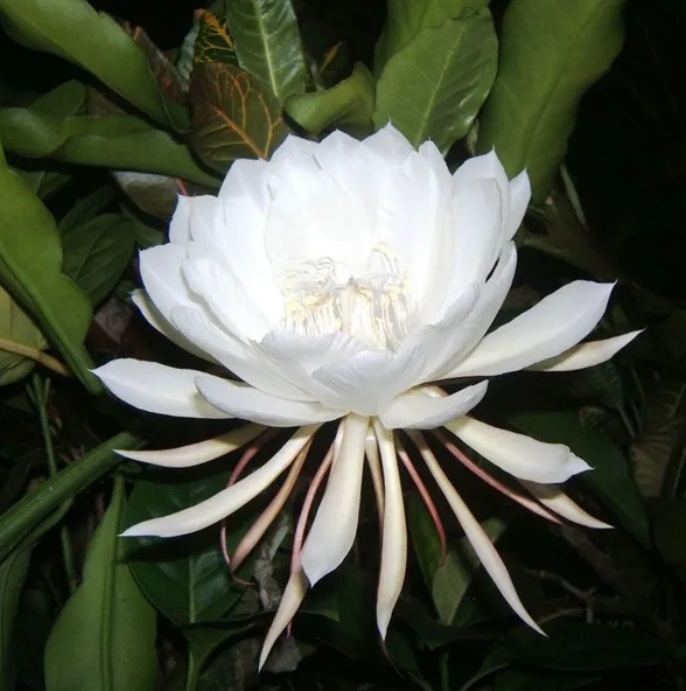
Rare exotic ornamental plantA rare, premium plant for collectors and special gardens.
Sold by a Coimbatore farmExotic Organic Farm, Kuppanur, Coimbatore.
Suited to Indian climateCare notes written for Indian heat, monsoon and soil.
Live plant, WhatsApp supportAsk us anything before and after you order.
Epiphyllum oxypetalum, the Queen of the Night, is a jungle cactus native to southern Mexico (Chiapas, Tabasco and Veracruz) and Guatemala, and it grows through Central America to Venezuela and Brazil. In the wild it is epiphytic, growing on trees and clinging with aerial roots. Its flat, wavy, spineless stems look like leaves, and it is famous for its flowers: huge, fragrant, white blooms, up to about 23 cm (9 inches) across, that open after sunset and are finished by morning.
In India it is widely called Brahma Kamalam or Brahma Kamal, because the flower resembles a lotus. That name also belongs to a different Himalayan flower (Saussurea obvallata), so we list the botanical name to be sure. Indian gardeners often see the Queen of the Night bloom during the monsoon, when longer days and higher humidity trigger flowering, and a large plant can flower several times in a season. It is easy to grow in a pot or hanging basket in bright, indirect light.
| Botanical name | Epiphyllum oxypetalum |
| Common names | Queen of the Night, Brahma Kamalam (Brahma Kamal), Dutchman's pipe cactus, orchid cactus |
| Family | Cactaceae (cactus family) |
| Native to | Southern Mexico and Guatemala, through Central America to Venezuela and Brazil |
| Plant type | Spineless epiphytic cactus (jungle cactus) |
| Mature size | Can reach 2–3 m long, or more |
| Flowering in India | Late spring through the monsoon, roughly May to September; a large plant can flower more than once |
| Flower | Fragrant white, up to about 23 cm across; opens after sunset for one night |
| Light | Bright, indirect light |
| Water | Moderate; let the top of the mix dry; never waterlogged |
| Growing medium | Well-drained mix with bark and coarse sand |
| Difficulty | Easy; patience needed for the first flowers |
Written for India's heat, monsoon and soil. These are general guidelines; adjust to your city, soil and season, and message us if you want advice for your location.
Give bright light without harsh afternoon sun, for example near an east-facing window or under a shade net. It grows in the shade of trees in the wild.
Water regularly in the growing season, letting the top of the mix dry slightly between waterings, and reduce in cooler months. Overwatering causes rot.
Use a well-drained mix with bark and coarse sand. It flowers well when slightly root-bound, so repot only when the pot is crowded.
Feed monthly in the growing season with a balanced fertiliser, and stop in the coolest months.
The long, arching stems suit hanging baskets and tall pots. Stake or tie heavy stems, and trim any that get untidy.
Longer days and higher humidity trigger blooms, which is why it often flowers in the monsoon. Young plants can take a few years to flower. Check in the evening once buds are large.
The Queen of the Night usually flowers from late spring through the monsoon in India, roughly May to September, and a large plant can flower more than once in a season. Buds form along the edges of the stems and open after dark, around 9 pm, and each flower lasts a single night. Flowering responds to longer days and higher humidity, which is why it often blooms in the rains. Young plants can take a few years to flower.
Queen of the Night · view 1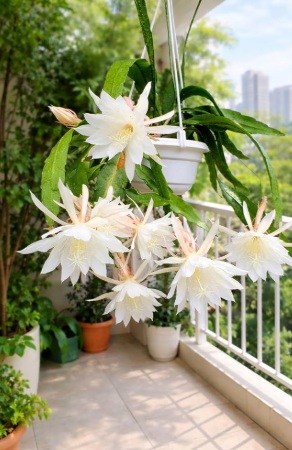 Queen of the Night · view 2
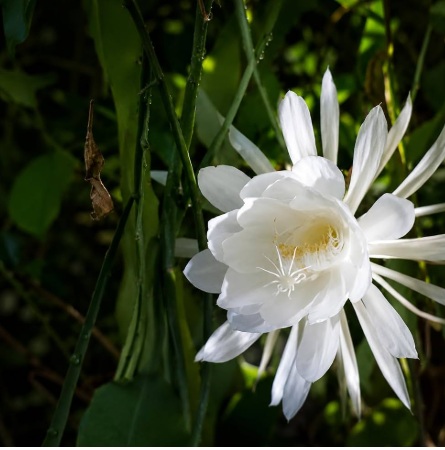 Queen of the Night · view 3
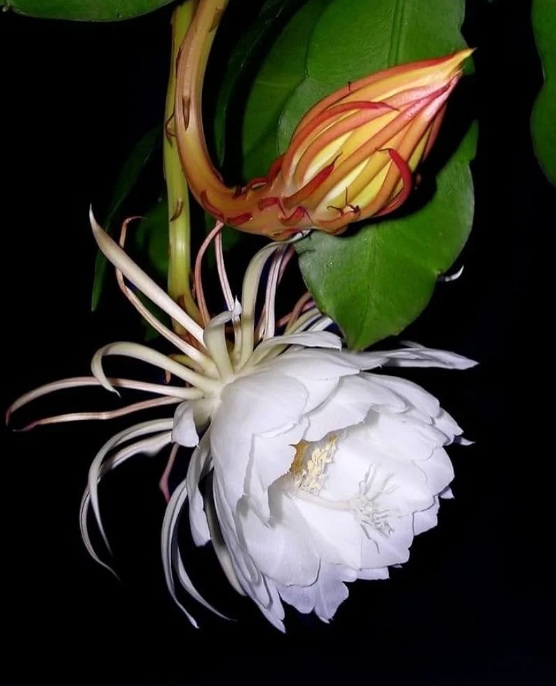 Queen of the Night · view 4
 Queen of the Night · view 5
Usually from late spring through the monsoon, roughly May to September, and a large plant can flower more than once in a season.
Yes. The flowers open after sunset, usually around 9 pm, and are over by morning, so check in the evening once the buds are large.
In much of India, Epiphyllum oxypetalum is called Brahma Kamalam or Brahma Kamal. The same name is also used for a different Himalayan flower, Saussurea obvallata, so check the botanical name when you buy.
Bright, indirect light. Avoid harsh afternoon sun, which scorches the stems.
Regularly in the growing season, letting the top of the mix dry slightly between waterings, and less in cooler months. Overwatering causes rot.
Yes. It grows well in a pot or hanging basket, and it flowers best when slightly root-bound.
The White Queen of the Night (Epiphyllum oxypetalum) is priced at Rs 3,500 per live plant at Exotic Organic Farm. Message us on WhatsApp to confirm current availability and plant size.
Live plants are packed carefully and shipped from our Coimbatore farm. Message us your pin code on WhatsApp and we will confirm the plant size, packing and delivery time for your location.
Looking for the Queen of the Night plant price in India, where to buy Brahma Kamalam (Epiphyllum oxypetalum) online, or care tips for the night-blooming cactus? This page covers all three. The Queen of the Night is one of the rare exotic ornamental plants for sale in India at exoticfarm.in, from Exotic Organic Farm in Coimbatore, with delivery to Chennai, Bengaluru, Kerala and the rest of India (message us to confirm for your pin code).
₹1,900 · Rare plant
₹1,500 · Rare plant
Rare live plants: bat flower, water lily, bottlebrush and more.