
Exotic Organic Farm
Coimbatore, India
The "jumbo" of the mango world — giant 600g-1kg fruit with a striking yellow-orange skin and rosy-red blush. Left to ripen naturally on the tree in living organic soil — never picked green, never gassed, never rushed.
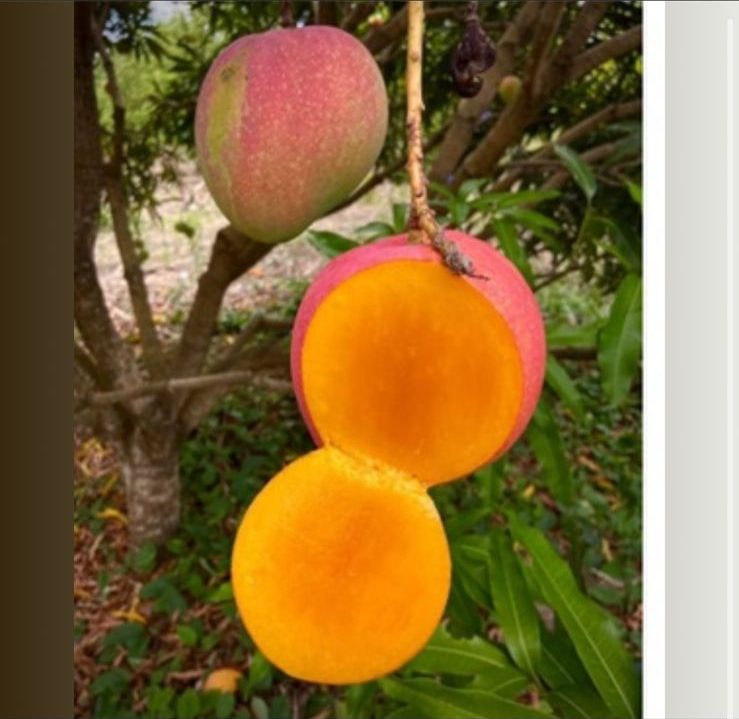
Tree-ripenedFull sugar and flavour development, never picked green.
Zero chemicalsNo calcium carbide, no synthetic ripening agents, ever.
Living organic soilJeevamrutham & Panchagavya fed, nutrient-dense fruit.
Harvested to orderPicked close to dispatch, not warehoused for weeks.
Most people's idea of "mango" is shaped by whatever's cheapest and most available — usually picked hard-green and force-ripened for the shelf. R2E2 is a different experience entirely, starting with sheer size: a single fruit commonly weighs 600g to a full kilogram, with a striking yellow-orange skin blushed rosy-red. Cut it open and the flesh is a deep, vivid orange, completely clean and fiberless, with a flavour that balances rich sweetness against a subtle citrus tang — less cloying than many mango varieties, which is part of why it's become a favourite for people who find typical mango overly sweet. This is genuinely a fruit built to impress at the table, whether you're eating it solo or serving guests.
Most commercial mango in India is picked while still hard and green — weeks before it would naturally ripen — so it survives long transport and storage. To make it look ripe fast, sellers commonly use calcium carbide, a substance banned by the FSSAI for fruit ripening, or synthetic ethylene gas. Fruit force-ripened this way never develops the natural sugars, aroma compounds, and micronutrients that only form while a mango ripens slowly on the tree, in living soil. Heavy pesticide and chemical fertiliser use over years also depletes the soil's own micronutrients — meaning less nutrition even reaches the fruit in the first place, regardless of how it's ripened.
Mango is naturally rich in several nutrients that support everyday health — and how it's grown and ripened affects how much of that nutrition actually develops. Here's what this fruit generally offers:
Supports immune function and natural collagen production, which plays a role in skin elasticity.
A vitamin A precursor that supports eye health and contributes to skin's natural resilience.
Supports healthy digestion and helps contribute to steadier, more gradual energy release.
Natural plant antioxidants that help the body counter everyday oxidative stress.
This information is general nutritional education about mango as a fruit, not a medical claim about this specific product, and isn't intended to diagnose, treat, or prevent any condition. If you have specific health concerns, please consult a doctor or nutritionist.
This fruit is picked from the same R2E2 mango trees growing on our farm in Coimbatore, Tamil Nadu. We've been recognized by the India Book of Records for cultivating 38 exotic mango varieties on a single acre using entirely chemical-free methods, and our approach to organic cultivation of imported mango varieties has been featured by Pasumai Vikatan and covered in Kuruthu Manvasanai magazine.
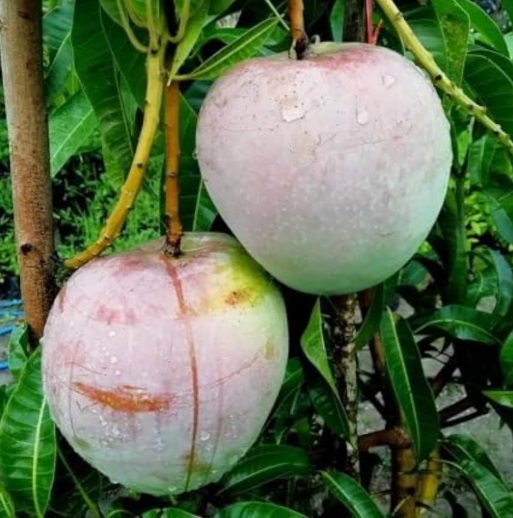 Tree-Ripened Fruit
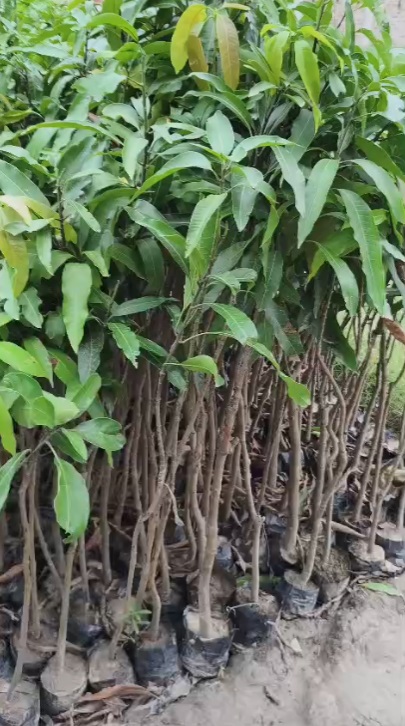 Our Orchard
Press: Pasumai Vikatan video feature · India Book of Records entry
For best flavour, chill and enjoy soon after arrival — the fruit is already at its peak.
Leave it out for a day to finish ripening naturally before refrigerating and eating.
The soft, almost fibreless flesh also works beautifully blended into smoothies or simple desserts.
Every mango ships from our own Coimbatore orchard, not a third-party warehouse.
Featured by Pasumai Vikatan, Kuruthu Manvasanai, and recognized by the India Book of Records.
Real answers about ripeness, dispatch timing, and quantity — not a scripted chatbot.
No synthetic fertiliser or chemical pesticide anywhere on this farm — ever.
Rich and sweet with a subtle citrus tang, clean and completely fiberless, in a giant 600g-1kg fruit with a striking yellow-orange, rosy-red-blushed skin.
No. It ripens naturally on the tree — we never use calcium carbide or ethylene gas to force-ripen fruit.
Like other mangoes, it's a good source of vitamin C, beta-carotene, fibre and antioxidants — nutrition that develops more fully when fruit ripens naturally rather than being force-ripened.
Still uncommon in Indian cultivation, requires careful grafting and netting to protect its large fruit, and yields fewer, larger fruit per tree — keeping supply limited relative to demand.
Hand-picked at peak ripeness, individually cushioned, and shipped pan-India with typical 2-5 day transit.
Refrigerate and eat within 2-3 days if fully ripe; rest at room temperature a day first if it arrives slightly firm.