
Exotic Organic Farm
Coimbatore, India
Large pink trumpet flowers that cover the tree, often on bare branches, in a spring display that is often compared to cherry blossom. A fast-growing showpiece for avenues, farmhouses and large gardens.
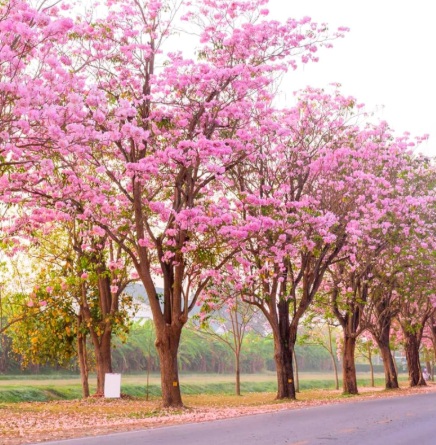
Exotic flowering treeA showpiece tree for avenues, farmhouses and large gardens.
Sold by a Coimbatore farmExotic Organic Farm, Kuppanur, Coimbatore.
Suited to Indian climateCare notes written for Indian heat, monsoon and soil.
Live sapling, WhatsApp supportAsk us anything before and after you order.
Tabebuia rosea, the pink trumpet tree or pink poui, is native to the tropical Americas, from southern Mexico through Central America to Venezuela and Ecuador, and it is the national tree of El Salvador. It was brought to India in the British period and is now a familiar sight in Indian cities, with Bengaluru's spring roadsides carpeted in its fallen blossoms. People often call it the Indian or Malaysian sakura because of the look, though it is not related to cherry.
It is a fast-growing tree, semi-evergreen to deciduous, that often sheds its leaves in the dry season and then bursts into bloom on bare branches. The flowers are large pink trumpets, each about 5–8 cm long, usually with a yellow throat. It tolerates heat, drought and city conditions, so it suits avenues, society campuses, farmhouses and large gardens.
| Botanical name | Tabebuia rosea |
| Common names | Pink trumpet tree, pink poui, rosy trumpet tree, Tecoma pink, Basant Rani |
| Family | Bignoniaceae (trumpet vine family) |
| Native to | Southern Mexico, Central America to Venezuela and Ecuador |
| Plant type | Fast-growing semi-evergreen to deciduous flowering tree |
| Mature height | Typically 8–15 m; taller in ideal conditions |
| Flowering in India | Roughly January to April, varying by region; sometimes a lighter second flush after rain |
| Flower | Pink trumpet blooms, 5–8 cm, often on bare branches |
| Light | Full sun, 6 hours or more |
| Water | Regular while young; drought tolerant once established |
| Difficulty | Easy |
Written for India's heat, monsoon and soil. These are general guidelines; adjust to your city, soil and season, and message us if you want advice for your location.
Plant it in an open, sunny spot. In shade it flowers late and far less.
Water young trees regularly until established. Later, ease off in the cooler dry months, because a dry spell helps trigger flowering. Never leave it waterlogged.
It tolerates most soils and city conditions. Heavy clay that holds water is the main thing to avoid.
Mix compost or farmyard manure into the pit at planting and each year before the monsoon. Avoid heavy nitrogen feeding, which gives leaves instead of flowers.
Remove dead and crossing branches after flowering. Heavy pruning cuts the next season's blooms.
Dig a pit about 60 cm each way, plant at the start of the monsoon, stake the young tree and keep it 5–6 m from walls, drains and overhead wires.
In India, Tabebuia rosea usually flowers from about January to April, depending on the region and the year. Blooms often arrive on bare branches after a dry spell, and the tree can show a lighter second flush after rain. Young trees generally need a few years to establish before they flower fully. Full sun, a drier cooler spell before the season and light pruning give the best display.
Tabebuia rosea · view 1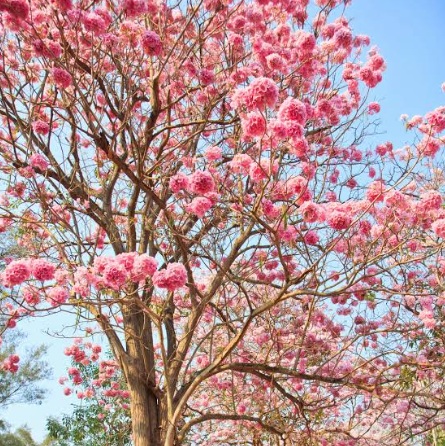 Tabebuia rosea · view 2
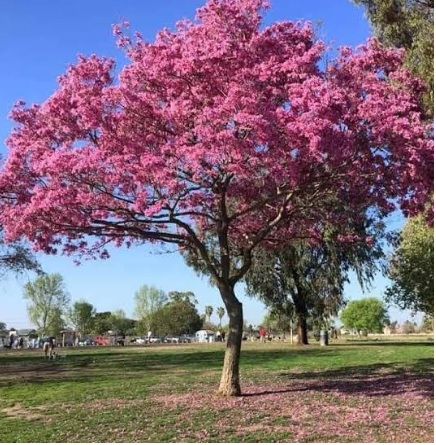 Tabebuia rosea · view 3
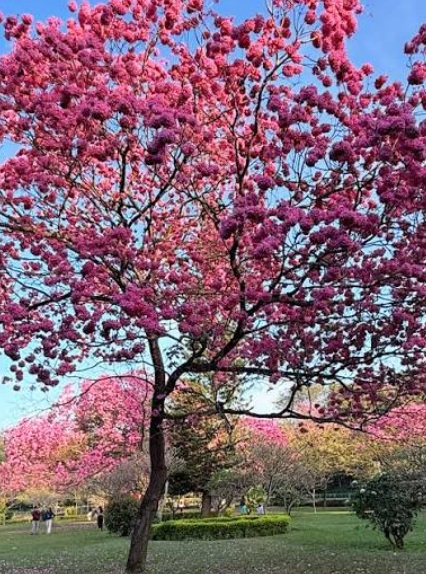 Tabebuia rosea · view 4
Roughly January to April, depending on the region and the year, often on bare branches after a dry spell. A lighter second flush can follow rain.
The usual causes are shade, overwatering in the dry season, too much nitrogen fertiliser, heavy pruning, or a young tree that has not yet matured. Give it full sun, ease off water in the cooler months and prune lightly.
No. It is a tropical American tree, not related to cherry. It is nicknamed the sakura in some places because its spring bloom of pink flowers looks similar.
Typically 8–15 m tall with a spreading crown, and taller in ideal conditions. Keep it 5–6 m away from buildings, drains and overhead wires.
A young sapling can live in a large container for a year or two, but this is a full-size tree. For good growth and flowers, plant it in the ground in full sun.
Often yes. It is semi-evergreen to deciduous and commonly sheds leaves in the dry season, just before it flowers.
The Tabebuia rosea sapling is priced at Rs 2,500 per live plant at Exotic Organic Farm. Message us on WhatsApp to confirm current availability and sapling size.
Live saplings are packed carefully and shipped from our Coimbatore farm. Message us your pin code on WhatsApp and we will confirm the sapling size, packing and delivery time for your location.
Looking for the Tabebuia rosea price in India, where to buy pink trumpet tree online, or Tabebuia rosea care tips? This page covers all three. Tabebuia rosea (Tecoma pink, pink poui) is one of the exotic flowering trees for sale in India at exoticfarm.in, from Exotic Organic Farm in Coimbatore, with delivery to Chennai, Bengaluru, Kerala and the rest of India (message us to confirm for your pin code).
₹2,200 · Flowering tree
Rare live plants: bat flower, water lily, bottlebrush and more.